Scientific progress thrives at intersections. When human health, animal health, and environmental systems overlap, microbes evolve, resistance spreads, and the need for intelligent surveillance becomes urgent.
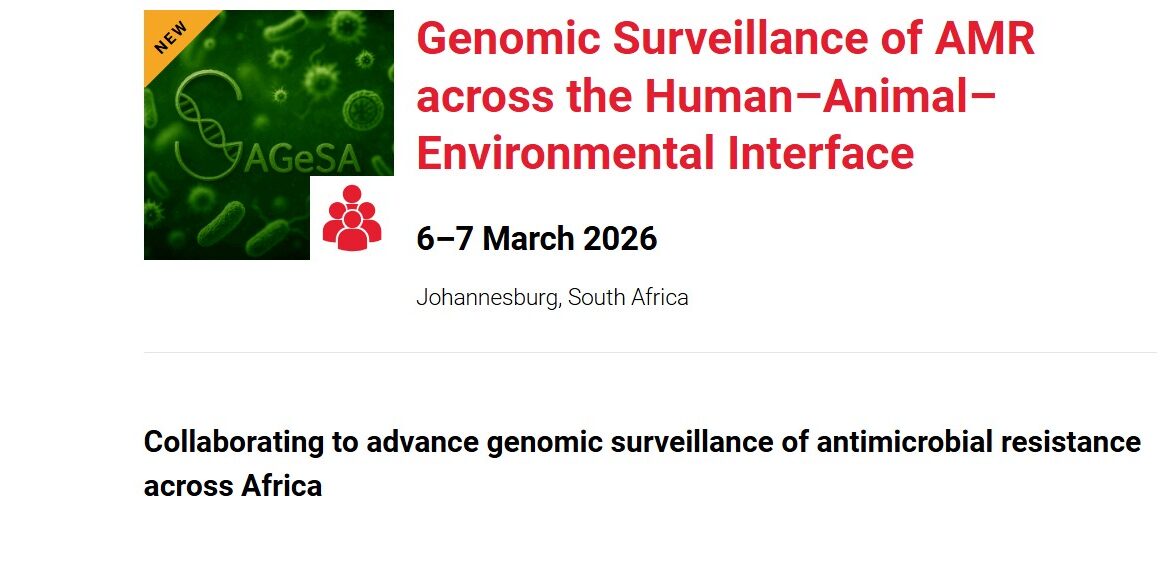
 The CPM Research Institute for Climate Health is proud to announce that Mr. Eniola Akoledowo has been selected to present his research at the Genomic Surveillance of AMR across the Human–Animal–Environmental Interface meeting, taking place 6–7 March 2026 in South Africa hosted by Wellcome Connecting Science, located at the Wellcome Genome Campus, United Kingdom.
His abstract, titled: “Genomic and One Health Assessment of Multidrug-Resistant Salmonella spp. from Abattoirs in Southwestern Nigeria: Implications for Surveillance Across the Human, Animal and Environmental Interface.”
has been officially accepted for an in-person poster presentation.
This recognition places research emerging from Southwestern Nigeria within a global scientific dialogue on antimicrobial resistance (AMR), one of the most pressing biological threats of our time.
Why This Research Matters
Antimicrobial resistance is not confined to hospital wards. It moves silently through food systems, livestock, water sources, and communities. Abattoirs represent a critical surveillance point where animal pathogens can cross into human populations. Studying multidrug-resistant Salmonella species within this context provides essential insights into how resistance genes circulate across ecological boundaries.
Mr. Akoledowo’s work applies genomic analysis within a One Health framework — an approach that recognizes that human health is inseparable from animal and environmental health. By integrating molecular data with environmental and public health perspectives, this research contributes to building surveillance systems capable of detecting emerging resistance before it becomes unmanageable.
The Wellcome event focuses on genomic tools for AMR surveillance across interconnected systems. Being selected to present at this meeting underscores the scientific relevance and methodological rigor of the work conducted at CPM Research Institute for Climate Health.
This invitation signals more than conference participation. It represents international recognition of Nigerian-led genomic research and its contribution to global AMR monitoring strategies.
Strengthening Climate-Health and One Health Synergy
Climate variability, agricultural practices, antibiotic usage in livestock, and environmental contamination all shape resistance patterns. Effective surveillance must therefore be interdisciplinary, data-driven, and globally collaborative.
By presenting this research at the Wellcome Genome Campus, CPM Research Institute strengthens its commitment to advancing climate-health science through genomic innovation and One Health integration.
We congratulate Mr. Eniola Akoledowo on this achievement and celebrate the growing international visibility of climate-linked infectious disease research emerging from Nigeria.
Pathogens do not respect borders. Surveillance cannot afford to either.